The Estate

The Vineyard

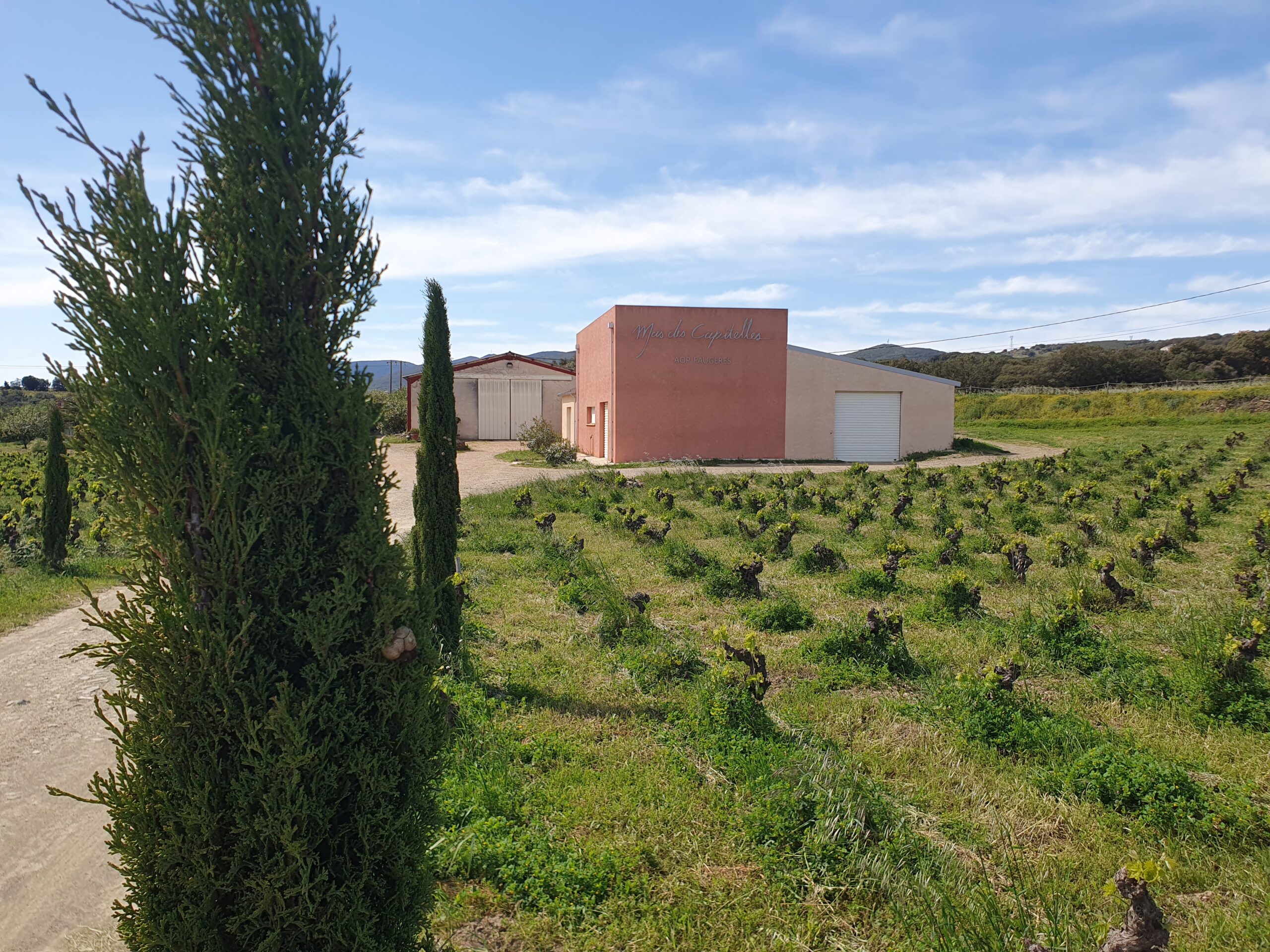
Located in the heart of the AOP Faugères on the townlands of the same name, the Mas des Capitelles vineyard extends over 28 hectares of vines consisting essentially of the southern varieties : Carignan, Mourvèdre, Grenache, Syrah and Cinsault for our red wines and Roussanne and Vermentino for our white wine.

They have been cultivated in thes chist hillsides of Languedoc for generations, in a unique terroir characterized by its southern exposure, its dry climate, altitude (250m), its slightly acid soils and its influence on the north wind.

Exclusively farmed under Organic Agriculture, our vineyard is managed with special attention to natural balances, soil vitality, and the cycles of the living ecosystem.

Consisting largely of old Carignan and Mourvèdre varieties, our vineyards allow us to product of wines of outstanding quality that keep exceptionally well over time.

The Work of Time

Aware that these grape varieties, which we hold so dearly, can only reveal their full potential and complexity with time, we have chosen patience and humility to present our signature wines, Aion and Etern.
The signature Aion cuvées — Vintage Blanc and Vieilles Vignes — flourish for at least two years, allowing delicate aromas and minerality to emerge on notes of fruit and remarkable freshness.
The signature Etern cuvées — Primus, Vintage Rouge, Crescendo, Carignan, and Collection — benefit from an extended aging of at least five years, enabling the power and structure of Carignan and Mourvèdre to fully express themselves and produce wines of exceptional depth, length, and finesse. Time softens the tannins, creating a subtle balance between strength and freshness that is the hallmark of our estate.
It is this commitment to long aging that gives our wines their depth, balance, and unique elegance.
This meticulous approach to refining our wines is guided by a single idea: to highlight our terroir and vineyard.

Winemaking

OUR PHILOSOPHY

Convinced that great wine cannot be made without a great vineyard, we pay particular attention to how we cultivate our vines.
That’s why the 28 hectares of vines that make up the Mas des Capitelles are worked with traditional methods and in respect for the environment.

Our vineyard is characterized by a high proportion of Carignan, the fundamental grape variety used in the wines of our appellation and more generally in Languedoc Roussillon wines. This variety, often maligned in the past, allow great wines to be produced on dry and sunny hillsides, wines that are powerful, generous and in direct relation to their terroir of origin.

For this reason our family has, from generation to generation, focused its particular attention on cultivating this variety. This is demonstrated by the presence of many vines that are more than 60 years old, or some that are even more than 100 years old.

Another variety, that we especially use for the production of our wines, Mourvèdre. This variety allows to create wines of character with tastes of leather, pepper and blackcurrent, and that have remarkable aging potential.

CULTIVATION METHODS

The vineyard is fully plowed several times a year, either in a single direction or else in both directions if the spacing is sufficient. This aerates the soil properly and allows microbial life to develop.

The vines are mainly trained in traditional manner and short, 90% trained in goblets (no wires). This allows them to mature better, considering our shale-based soils, and allows us to better control the yields. This pruning also allows better foliar exposure and therefore an optimal concentration.
The harvest is entirely done manually and sorted on the vines for average yields between 20 and 30 Ho / Ha.

The choice of sorting on the vine and and not on a sorting table is guided by a our approach to winemaking; which consists of not working with and making wine from grapes that do have the right quality.

THE ENVIRONMENT

Committed to preserving the environment and its biodiversity, Mas des Capitelles has been engaged since March 17, 2008 in a transition toward organic farming, culminating in our first certified organic harvest in 2011.

The estate uses exclusively products authorized for organic agriculture, without chemical herbicides, and relies solely on organic amendments to nourish the soils.

Treatments are mainly carried out using sulfur and copper (less than 4 kg per hectare per year).

Our estate is certified by Ecocert.

In the vineyard, we complement this approach with cultural practices based on careful observation of the living ecosystem and the vine’s natural cycles. Certain interventions are carried out in accordance with the lunar calendar.

Natural preparations made from organic and mineral materials are applied to the soil to encourage biological activity and promote exchanges between soil and plant. Other sprays, applied to the canopy, support healthy leaf development and grape ripening.

We also use various plant decoctions and herbal infusions such as horsetail, nettle, and willow, helping to naturally strengthen the vine against fungal diseases.

This way of cultivating the vine reflects our deeply rooted, traditional vision of winegrowing: listening to nature, to living systems, and to the plant’s natural cycles, in order to seek a lasting balance between soil, vine, and people.

It continues the agricultural practices once carried out by previous generations, founded on observation, common sense, and respect for the natural environment. These simple principles, long at the heart of the winegrower’s craft, are those we aim to place back at the center of our work today — in contrast to a “more and more” approach to agriculture, often disconnected from environmental balance and the pursuit of quality.
The Carignan

Iconic grape variety of Languedoc, Carignan is an integral part of our identity and the typicity of our wines.

Our vineyard is distinguished by a large proportion of Carignan, a typical grape variety of the appellation and more generally of Languedoc Roussillon wines.

Long underestimated, Carignan reveals all its grandeur on our arid and sunny hillsides, giving birth to imposing, generous wines deeply rooted in their original terroir. It is for this reason that we have always given particular care to our old Carignans, as evidenced by the presence of numerous vines over 60 years old, some even a hundred years old.

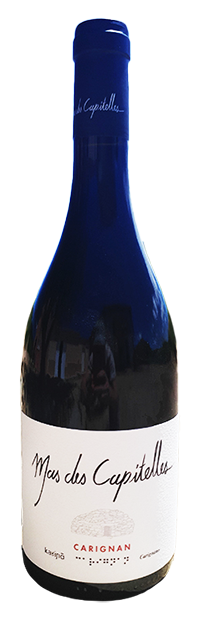
Lovers of this grape variety, both in terms of its taste and sentiment, we decided to dedicate a 100% Carignan vintage to it in order to pay homage to it and share the complexity of this unique grape variety with as many people as possible.

The cellar

For the production of our red wines, we choose not to use cooling systems. Harvesting takes place at optimal ripeness, generally later in the season, when nights naturally become cooler from mid-September onwards. The natural temperature variation between day and night allows fermentation temperatures to be regulated naturally, respecting the rhythm of the grapes and the character of each vintage.

Our history

Viticulture has been part of our family for ten generations.

Our grandfather was one of the first to initiate the creation of our village wine cooperative and the Faugères appellation, for which he foresaw a promising future. As a result, he gave up making wine at home so he could join the cooperative cellar, and he became its president.

Some years later his son Jean Laugé, joined him. He remained there for no less than 35 years, until 1999. Then when his sons Cédric and Brice Laugé arrived on the domaine, he decided to change to making wine in his own cellars.
For us it is important to remain a family business and, as artisans in a small-scale activity, all productions steps are made by us.
This allows us to perform constant monitoring of the quality of our wine products, including tasting.